Overview of ASD
AUTISM OVERVIEW
Autism Spectrum Disorder (ASD) is a complex developmental disability resulting from neurological differences that can affect how a person communicates, understands language, relates to others, and experiences the world. Autism is called a "spectrum" because every autistic individual has unique strengths, interests, and support needs. These differences are not viewed as deficits; instead, a strengths-based approach recognizes neurodiversity and provides individualized support.
Defining and understanding autism is an evolving process shaped by decades of research across multiple disciplines. Autism is both a clinical diagnosis and an educational disability category. When working with students in Virginia public schools, it is meaningful to look at both.
According to the Diagnostic and Statistical Manual of Mental Disorders, 5th edition (American Psychiatric Association [APA], 2013), Autism Spectrum Disorder (ASD) is characterized by the following:
Impairments in Social Communication and Interaction
- Deficits in social-emotional reciprocity.
- Deficits in nonverbal communication used for social interaction.
- Difficulty developing, maintaining, and understanding relationships.
Restricted or Repetitive Patterns of Behavior
- Preoccupation with objects or topics of interest.
- Inflexibility and difficulty with changes in routines.
- Repetitive movements, use of objects, or speech.
- Hyperreactivity or hyporeactivity to sensory input.
These characteristics can vary widely from person to person. Each individual has unique strengths, interests, and support needs.
A clinical or medical diagnosis may inform the eligibility team, but it does not automatically establish eligibility under the Individuals with Disabilities Education Act (IDEA). Virginia's Regulations Governing Special Education for Students with Disabilities do not require a medical diagnosis to determine eligibility for special education services.
IDEA defines autism as:
"A developmental disability significantly affecting verbal and nonverbal communication and social interaction, generally evident before age 3, that adversely affects a child's educational performance. Other characteristics often associated with autism are engagement in repetitive activities and stereotyped movements, resistance to environmental change or change in daily routines, and unusual responses to sensory experiences"
Virginia Department of Education (VDOE) Resources
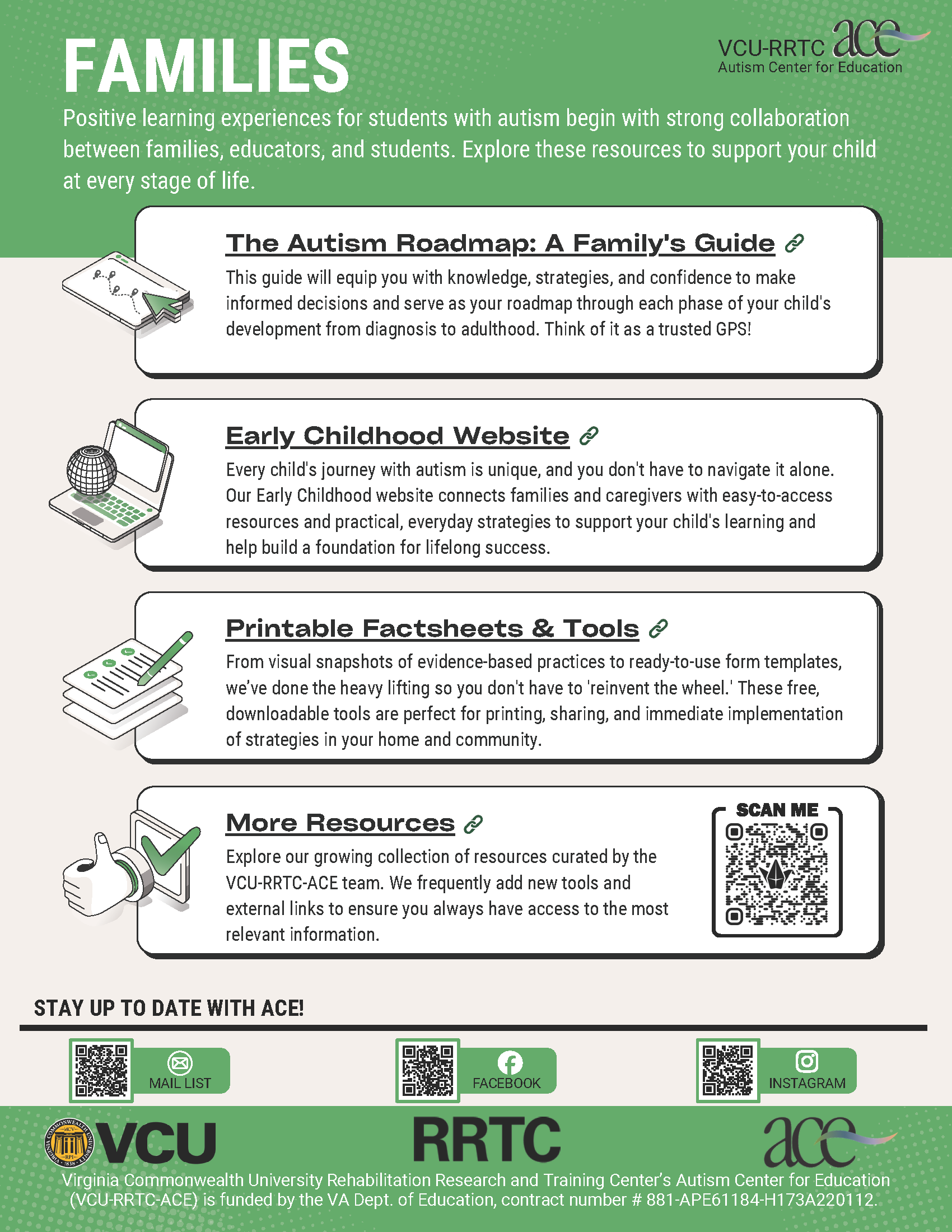
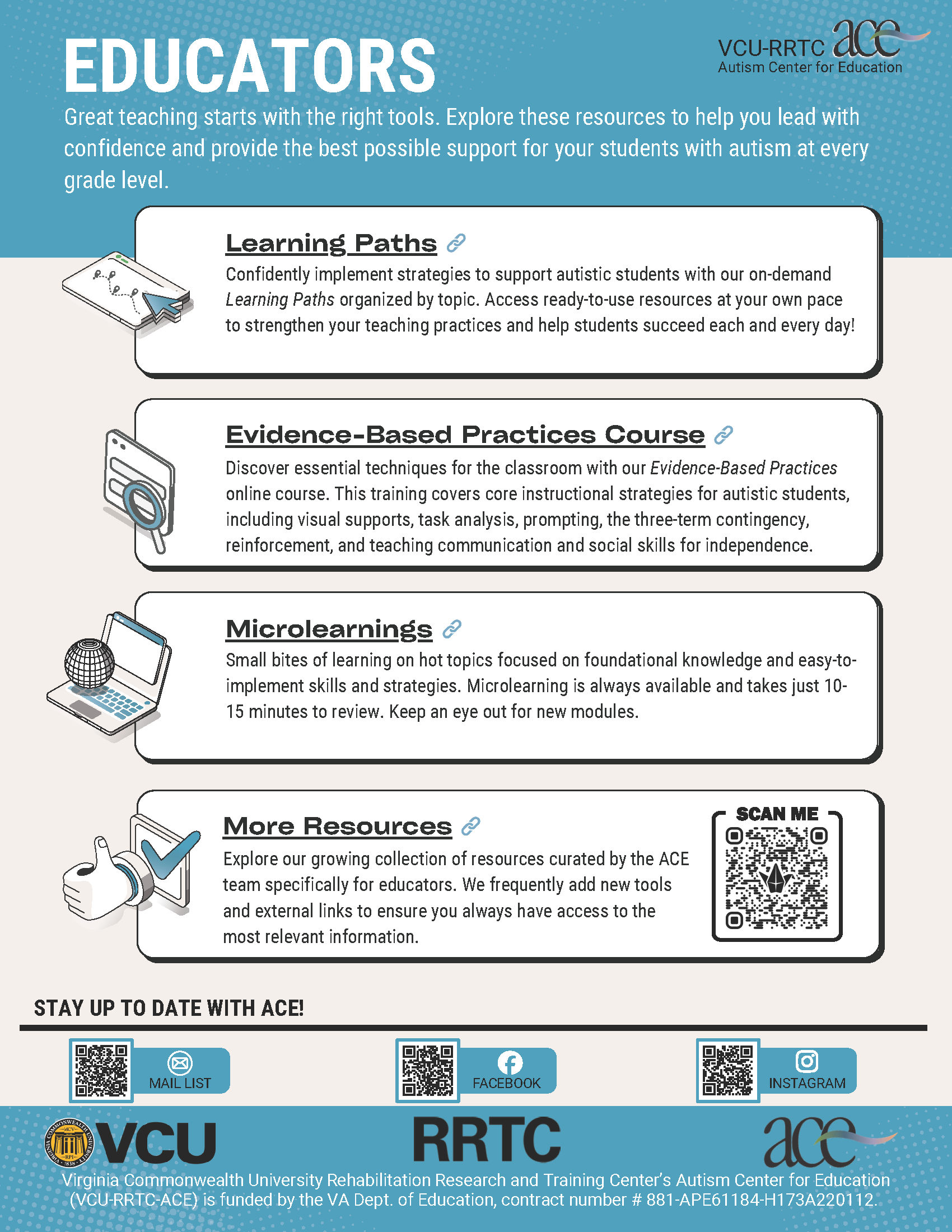
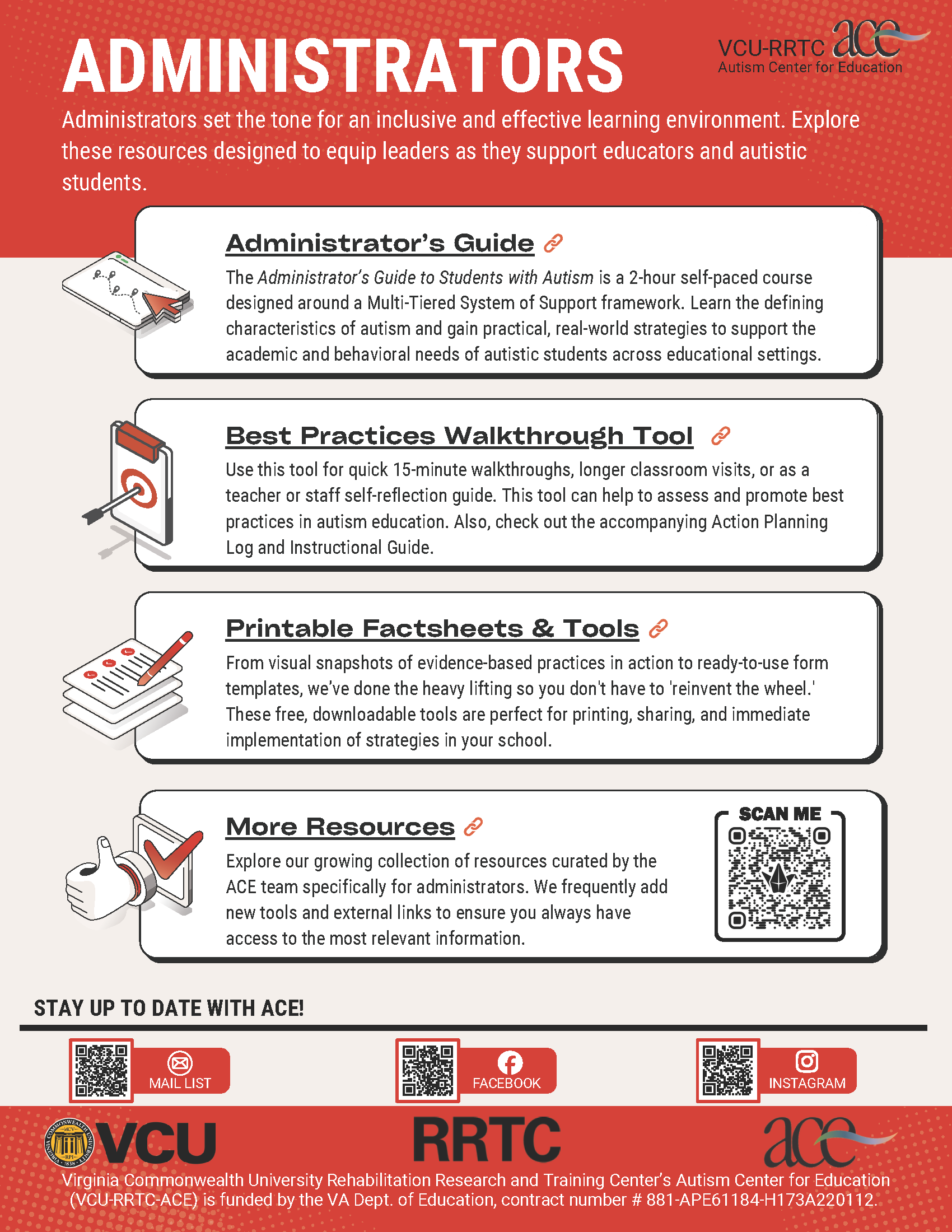
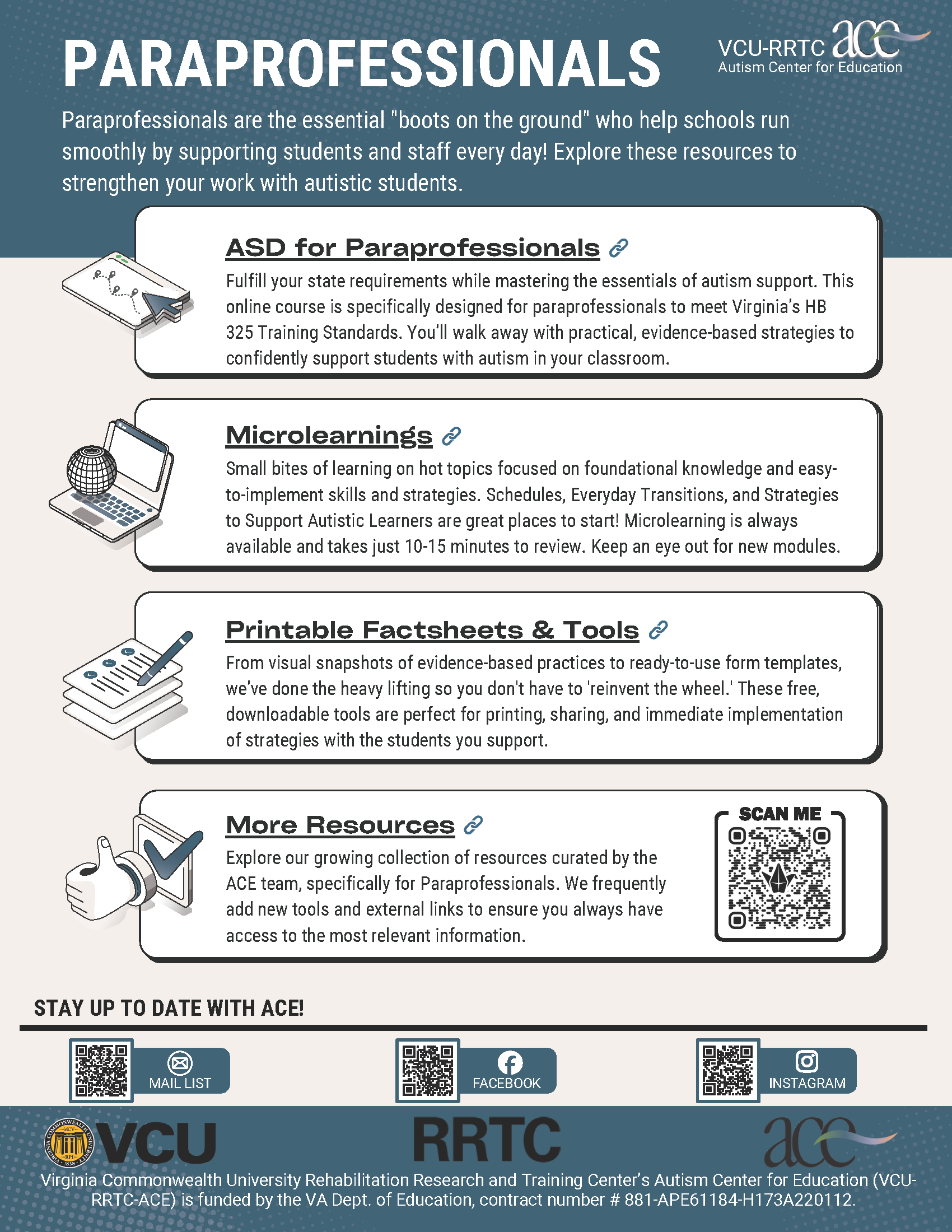
Select your role below to learn more about supporting autistic students:
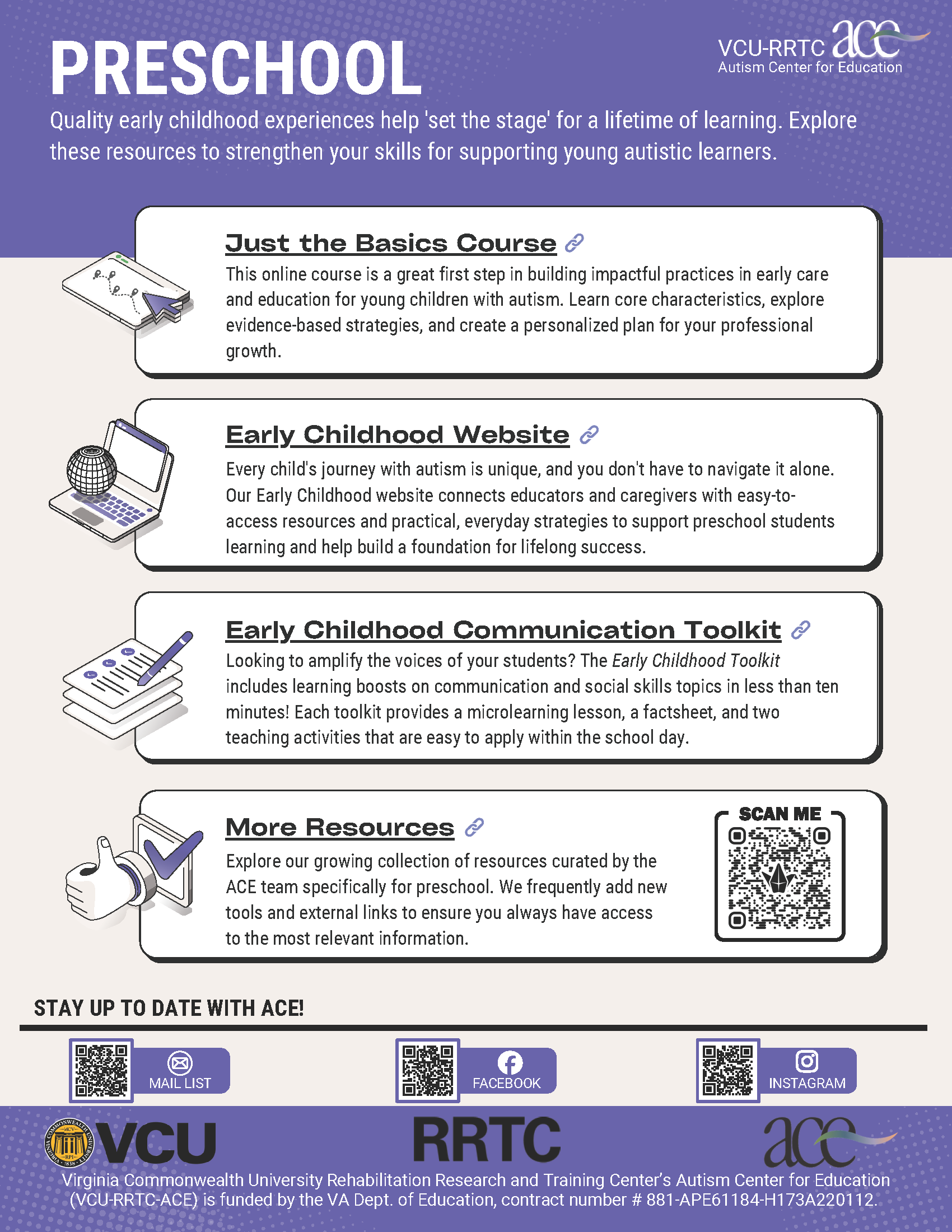
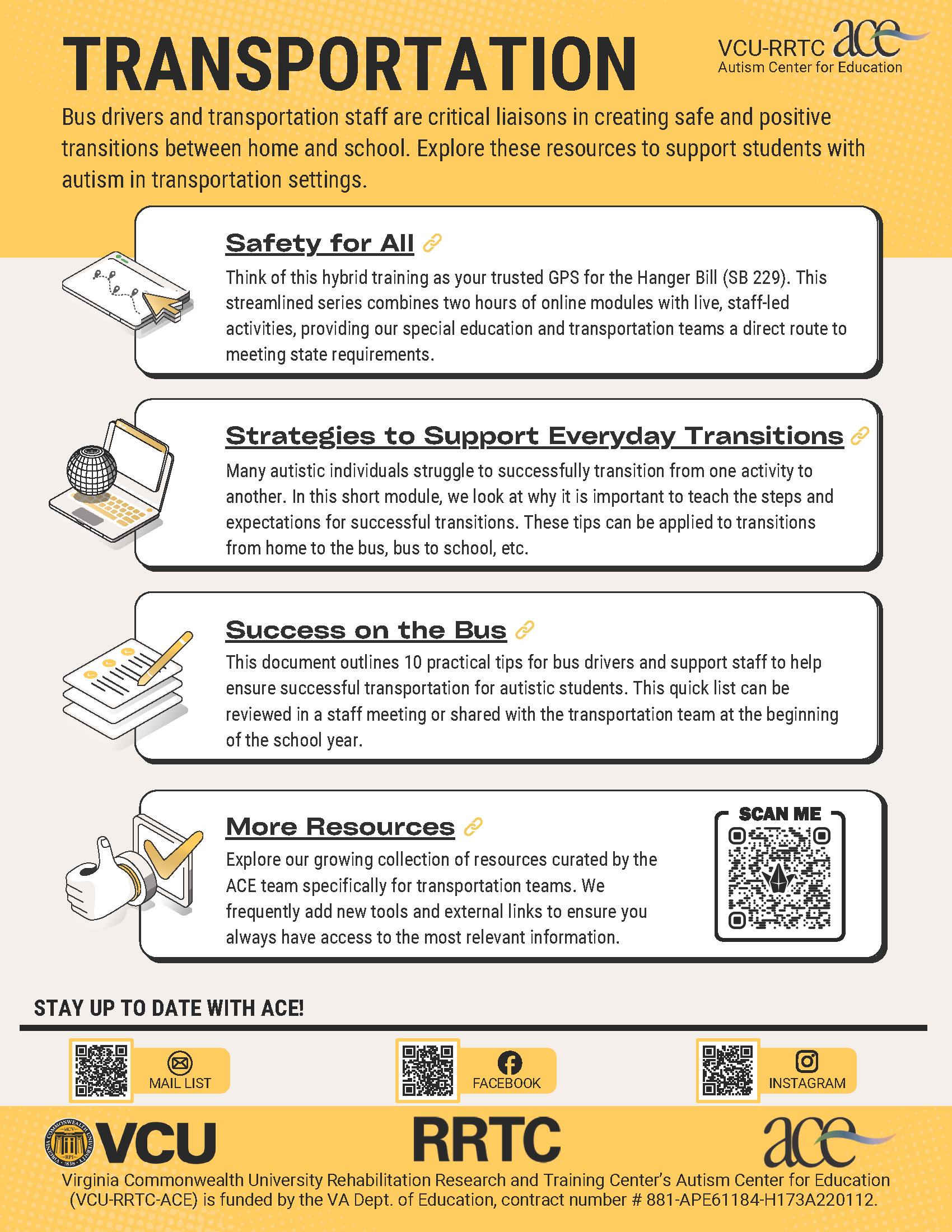
Featured ACE Resources
- Factsheet: Autism Spectrum Disorder
- Factsheet: Just the Facts: The DSM-5 and Autism Spectrum Disorder
- Factsheet: Looking at Aging and Autism
- Microlearning Series: All About Autism
- Early Childhood Learning Paths
- Online Course: Foundations of Autism Spectrum Disorder
- Online Course: The Autism Roadmap: A Family's Guide
Additional Resources
Virginia
- Autism Society Connects members to the resources they need through education, advocacy, resources, and community programming.
- Center on Transition Innovations Provides resources and innovative models to support students with disabilities in their transition to adulthood.
- I'm Determined Aims to empower youth with disabilities to build self-determination skills and take an active role in leading their own lives.
National
- Autism Internet Modules (AIM) Offers free, online, educational modules designed for educators, professionals, and families.
- Autism Speaks Provides autism-related news, research, updates, and family support.
- Centers for Disease Control Provides information about Autism Spectrum Disorder and Autism Case Training videos.
- National Institute of Neurological Disorders and Stroke Provides an Autism Spectrum Disorder fact sheet answering commonly asked questions about autism.